Articles
5 min read
CFO’s & Controllers: How to Put an End to the Monthly Closing Crisis and Get Your Weekends Back?
Published on
February 6, 2026
It’s 6:00 PM on the second business day of the month and basically everyone else in the office has long since headed home to enjoy a decent evening with family. Meanwhile, you’re still stuck there, staring at a spreadsheet with 37 tabs, three of which are at that lovely point where they’re not doing much of anything.
You’re right in the heart of the Excel chaos - that frantic, high-pressure dance of exporting data from your ERP, manually cleaning it up & hoping like crazy that a single dodgy VLOOKUP doesn’t turn your nice clean consolidated EBITDA into a completely random 9 digit phone number.
Excel works for budgeting, project management, and scheduling because of its flexibility and familiarity, which is why so many organizations rely on it for a wide range of financial and operational tasks, even though it comes with significant limitations and risks.
If this is your usual experience then don’t worry, you are not alone. In fact, massive amount of organizations are still reliant on Excel for budgeting, planning, and forecasting, despite the associated risks such as lack of audit, security, and governance. But let’s be honest, you didn’t spend years mastering financial strategy so you could waste your career as some kind of “data custodian”.

Most Nordic finance leaders have actually already made the jump to Microsoft Power BI. It’s the industry standard for a reason. But there’s a massive gap between owning Power BI & actually having a working reporting system.
As we like to say: Power BI on it’s own is a bit like a powerful engine sitting in your garage. It looks impressive, but at the end of the day, it is just a pile of parts. To get any value out of it, you generally need a team of expensive developers, months of integration work & a data warehouse that costs a fortune to maintain.
Until that’s all knocked up, you’re stuck with manual exports & “different truths” being bandied about across departments. When Sales says one thing & Finance says another, the meeting turns from a strategic discussion into some kind of confusing audit.
Manual reporting isn’t just a pain in the a; it’s a strategic liability.
The importance of sound financial principles — such as liquidity, risk management, and cost-benefit analysis — cannot be overstated for CFOs. Strong controls and adherence to these principles are essential to avoid these risks and ensure business success.
Witty Remark: If your current “datawarehouse” is just a folder named “REPORTS_FINAL_v2_USE_THIS_ONE_REAL_FINAL”, we seriously need to talk.
We've helped thousands of companies around the world move away from "gut feelings" and towards high-velocity data driven decision making.
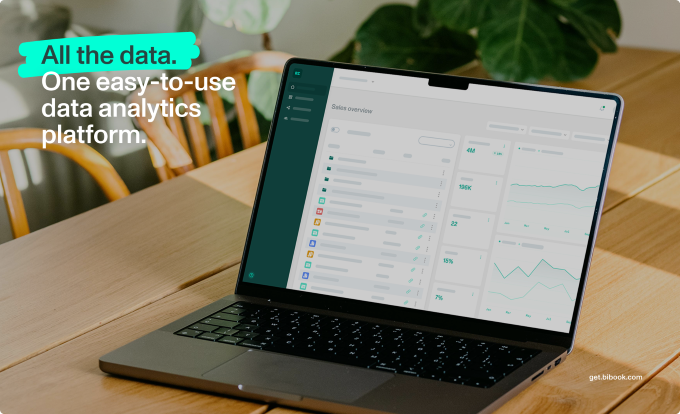
BI Book is a business intelligence platform that centralises all your Power BI reports into one secure, managed environment. It’s the finished model that lets you drive off into the sunset from day one. Rather than building an infrastructure from scratch, you just tap into a ready-made platform backed by top-notch consulting.

CFOs play a critical role in organizations by deciding on investment decisions, financing decisions, and dividend decisions. When making these decisions, CFOs must regard various factors such as risk, funding options, and the company’s financial stability. Investment decisions involve allocating money and resources to generate the best possible returns for investors, while financing decisions focus on finding the optimal mix of debt and equity to fund operations, including the need to pay interest on borrowed funds, which impacts the company’s financing strategy and risk management. Dividend decisions determine how profits are allocated between retained earnings and payouts to shareholders, all with the aim of maximizing shareholder value. CFOs must assess various factors, evaluate financial risks, forecast future cash flows, and balance the cost of capital with associated risks, including the time value of money and liquidity, to ensure a sustainable financial structure. Effective financial decision-making is vital as it impacts a company’s profitability, liquidity, and overall financial health.
Controllers analyze financial information to provide management with the necessary decision-making support, create forecasts, and ensure timely delivery of financial reports. They serve as a crucial link between the finance department and management, advising on financial and strategic matters, and their role is essential for creating financial control, business insight, and long-term planning. Controllers are also involved in accounting tasks, internal reporting, and ensuring the accuracy of financial data, requiring strong analytical skills and a solid understanding of business operations.
We know the CFO’s biggest headache with Power BI: The Licenses. Having to buy individual Pro or Premium licenses for every single user in a large organisation can send your IT budget through the roof.
BI Book utilises Microsoft Fabric premium capacities. This means you can provide top-tire analytics to your entire organisation – central or external user groups - without the expensive per-user licensing fees. It’s 100% compliant with Fabric, so you can even use your own environment for hosting models if you prefer.
Planning and budgeting software has evolved significantly from on-premises solutions to cloud-based solutions, and emerging technologies like machine learning can materially improve planning accuracy and reduce time spent in planning processes.
Financial planning encompasses long-range plans, scenario modeling, annual budgeting and forecasting, ad-hoc reporting, and analysis.
We’ve helped thousands of companies globally get access to top level analytics within days – sometimes even hours. You own your data, you get to use it however you want via our OData API, & you get the most advanced BI Book AI to query your data as naturally as asking a colleague.
Financial planning has evolved from aperiodic activity into a continuous, data-driven process that incorporates historical performance, machine learning, and advanced AI for more accurate forecasting. BI Book helps organizations optimize financial processes, align planning applications with other systems, and build a connected view of the whole organization.
Budgeting is a process that requires analyzing and comparing actual versus expected financial performance to determine how to allocate expenditures and achieve financial goals. The annual budget is a key tool for setting financial expectations for the fiscal year, outlining what a company wants to achieve for a specific period in the future. Forecasting, on the other hand, is a continuous process throughout the year, while the annual budget is typically re-evaluated semi-annually or annually to ensure financial goals remain on track. Zero-based budgeting is a discipline where all costs must be justified at a granular level, disregarding previous budgets.
BI Book provides an overview of key financial data, supports management in making effective decisions, and helps achieve financial stability and growth. It enables users to edit, download, and customize reports and templates for various financial management tasks, including tracking income, expenses, and monthly income. BI Book helps manage and control financial operations, optimize resource allocation, and support senior management in strategic planning.
With BI Book, you can address capital budgeting, investments, cash flows, expenditures, and ensure your financial planning aligns with market trends and shareholder expectations. The platform strengthens the relationship between financial planning, operations, and business growth, helping organizations focus on achieving their financial goals effectively.
The Upshot? A finance department that provides insights, not just spreadsheets.
Stop being a data janitor, start being the strategic partner your company needs. Book a demo of BI Book and let us show you how automation could bring back your free weekends. Along the way you’ll see how we can save you a ton of time on month end closing, manage risk, and help you achieve better financial performance. Plus, BI Book is free to try and offers free resources and templates to get you started.
Start making your data more useful. Contact us now.
We would love to hear from you. Contact us today!